
Murali Deora, Minister of Petroleum & Natural Gas has urged the need for sustainable international oil prices stating that the high oil prices are neither in the interest of oil importing countries nor beneficial to the exporting nations.

Reliance Industries Ltd on Friday reported a 27 per cent jump in its September quarter net profit as earnings from the oil and gas business rebounded, and a pick-up in fashion and grocery helped boost retail revenues. The oil-to-retail-to-telecom conglomerate's consolidated net profit of Rs 17,394 crore, or Rs 25.71 per share, in July-September - the second quarter of the current 2023-24 fiscal - was 27.3 per cent higher than Rs 13,656 crore, or Rs 19.92 a share, earning a year back, the company said in a statement. The net profit was also higher quarter-on-quarter compared to Rs 16,011 crore earnings in the preceding three months ended June 30.

Gautam Adani had in the late 1970s applied to join a Mumbai college for education, but the college rejected his application. He did not pursue education but turned to business and went on to build a $220 billion empire. About four-and-a-half decades later, he gets called to the same college to deliver a lecture to students on Teachers Day. Adani had moved to Mumbai at the age of 16 and started working as a diamond sorter.
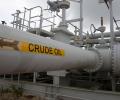
The government has slashed the windfall profit tax levied on domestically-produced crude oil as well as on export of diesel and ATF following a drop in global oil prices, according to an official order. The levy on crude oil produced by companies such as Oil and Natural Gas Corporation (ONGC) has been cut steeply to Rs 1,700 per tonne from Rs 4,900, the order dated December 15 said. Crude oil pumped out of the ground is refined and converted into fuel like petrol, diesel and aviation turbine fuel (ATF).

Pakistan on Thursday said it was committed to the ambitious $7.5 billion gas pipeline project with Iran despite the venture running into rough weather over financing.

Moody's said it expects exposure to low oil prices to shave off 0.8 per cent from real GDP growth on average across oil exporting countries in 2016.

The government should scrap the windfall profit tax on domestically produced crude oil as the levy is adversely impacting the capex-intensive exploration of oil and gas, the industry said in its recommendation for the forthcoming annual Budget. India first imposed windfall profit taxes on July 1, joining a growing number of nations that tax super normal profits of energy companies. At that time, a Rs 23,250 per tonne ($40 per barrel) windfall profit tax on domestic crude production was levied.

India's total purchase of oil from Russia in a month is probably less than what Europe does in an afternoon, External Affairs Minister S Jaishankar said.
The oil ministry is believed to have turned down Reliance Petroleum Ltd's request to export LPG from its newly commissioned refinery at Jamnagar in Gujarat, forcing the only-for-exports unit to sell the cooking fuel locally.

The government on Friday cut the windfall profit tax on locally produced crude oil in line with a fall in international rates, and reduced the levy on export of diesel and jet fuel (ATF). At the fifth fortnightly review, the government reduced tax on domestically-produced crude oil to Rs 10,500 per tonne from Rs 13,300 per tonne. The levy on the export of diesel was reduced to Rs 10 per litre from Rs 13.5. Also, the tax on Aviation Turbine Fuel (ATF) exports was cut to Rs 5 a litre from Rs 9 with effect from September 17, according to a finance ministry notification issued late Friday night.

'2019 was fought on delivery. But in 2024, you can see the before and after effects.'
India is keen to partner the proposed multi-billion Iran-Pakistan-India (IPI) gas pipeline project and has promised to resist "all external pressures on the issue", Iranian oil minister Gholam Hossein Nozari said.India's petroleum minister Murli Deora is set to arrive in Pakistan on April 21 to hold talks on transit fee to be paid to Islamabad on the $7 billion IPI project.
The windfall tax on oil produced within India and fuel exported overseas will make up for more than three-fourths of the revenue that the government lost when it cut excise duty on petrol and diesel to cool soaring inflation, industry sources said. India on July 1 joined a select league of nations globally that have taxed windfall gains accruing to oil companies from soaring energy prices. The government slapped a Rs 6 per litre tax on the export of petrol and jet fuel (ATF) and Rs 13 a litre on the export of diesel effective July 1. Additionally, a Rs 23,250 per tonne tax was levied on crude oil produced domestically.

Top losers in the Sensex pack included M&M, SBI, Yes Bank, Asian Paints, HDFC, Tata Steel and L&T, shedding up to 2.55 per cent. The broader NSE Nifty settled 79.80 points, or 0.72 per cent, down at 10,996.10.
India has given a four-month ultimatum to Iran to offer a discovered oil field if it wanted to export 5 million tonnes of liquefied natural gas to New Delhi.

India, which imports over 80 per cent of its oil needs, spent $87.7 billion on importing 220.43 million tonne (MT) of crude oil in 2017-18. For 2018-19, the imports are pegged at almost 227 MT.

The government on Monday ruled out making public the RBI report detailing the reasons why the central bank could not keep inflation within the targeted 6 per cent upper limit for the three consecutive quarters. "Yes sir, RBI has furnished a report to the central government, as mandated under Section 45ZN of the RBI Act, 1934 and Regulation 7 of RBI Monetary Policy Committee and Monetary Policy process Regulations, 2016," minister of state for finance Pankaj Chaudhary said in a written reply. The said provisions of the RBI Act, 1934, and regulations therein does not provide for making the report public, he said.
Mangalore Refinery and Petrochemicals Ltd, a subsidiary of Oil and Natural Gas Corporation, is considering plans to increase sales of aviation turbine fuel in the domestic market and cut down on exports gradually.
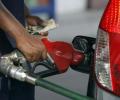
A looming global shortage of diesel in Europe presents India with more than one opportunity to profit from strong margins. A shortage of the fuel, a key contributor to inflation, has been exacerbated by the conflict in Ukraine, and western sanctions on Russian fuel supplies. The slowdown in natural gas supply means the West needs diesel to heat their homes this winter.

Stocks of Indian companies with exposure to Europe fell on Tuesday amid concerns about the impact on their sales in case the Russia-Ukraine crisis worsens and the US and its allies impose economic sanctions on Russia. While top conglomerates, including Reliance Industries, the Tata group, and Aditya Birla Group, said they did not have any significant exposure to Russia, executives of some of the oil and gas, pharmaceutical, and tea companies said they were monitoring the situation closely as they earned substantial income from the region. Russian President Vladimir Putin on Monday ordered troops into two breakaway regions of eastern Ukraine after announcing that Russia would recognise their independence.

Russia and China have a broad consensus today on almost all core issues related to global strategic stability, which is unprecedented in modern history, observes Ambassador M K Bhadrakumar.

Billionaire Mukesh Ambani's Reliance Industries has maintained its highest ranking among Indian corporates in the latest Fortune Global 500 list, jumping 16 places to rank at number 88. Reliance was ranked at number 104 in the 2022 ranking and in the 2023 ranking it is placed at number 88, according to the publication. The company has gained a whopping 67 places in the last two years from number 155 in 2021.

Stocks of Hindustan Petroleum Corporation Limited (HPCL), Bharat Petroleum Corporation Limited (BPCL) and Indian Oil Corporation Limited (IOCL) have more headroom left despite the sharp run in the last few weeks, suggests a recent report from Morgan Stanley. Stocks of these oil refining and marketing companies (OMCs), it believes, are seeing multiples re-rate as investors reassess long-term growth prospects. "IOCL trades at one year forward P/BV of 1.2x, 19 per cent below +1 standard deviation (SD); BPCL trades at one year forward P/BV of 1.5x, near historical averages; HPCL trades at one year forward P/BV of 1.5x, near +1SD," Morgan Stanley said.

The Indian Navy, which regards itself as the 'net security provider' in the Indian Ocean Region, has also stepped up to the plate, with a warship stationed at all times off the Gulf of Aden for counter-piracy tasks. 91 Indian warships have been deployed in the region since 2008, patrolling high risk areas where piracy was rampant.

Corporate India is more dependent than before on exporters of IT services such as Tata Consultancy Services (TCS), Infosys, and Wipro for earning foreign exchange. Such companies account for nearly 43 per cent of the forex revenues of listed firms, up from 22 per cent a decade ago. The listed IT services companies earned nearly Rs 4.2 trillion through exports in FY22, up 15 per cent from the Rs 3.65 trillion a year earlier. In comparison, the forex revenues or exports of the rest of the BSE500 companies were down 11.9 per cent to Rs 5.6 trillion last financial year.
India's $22 billion deal to import liquefied natural gas from Iran hangs in balance with Tehran on Tuesday asserting that the agreement was not binding as it has not been ratified by its Supreme Economic Council.
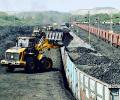
Production of eight infrastructure sectors increased by 5.4 per cent in November against a 3.2 per cent growth in the same month last year on a better show by coal, fertiliser, steel, cement and electricity segments, according to the official data released on Friday. Crude oil, natural gas and refinery products, however, recorded negative growth in November this year. The production growth of eight key sectors slowed down to 0.9 per cent in October.

A plea of the UK-based Vedanta group company to export its share of crude oil from Barmer oil field in Rajasthan was on Tuesday rejected by the Delhi high court on the ground that domestic crude cannot be exported till India attained "self sufficiency".
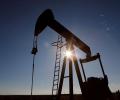
A fall in crude oil price and Aramco's $75 billion annual dividend commitment may have delayed Saudi company picking a stake in Reliance Industries Ltd's oil-to-chemical unit (O2C), research firm Jefferies said. Richest Indian Mukesh Ambani had in August 2019 announced talks for the sale of a 20 per cent stake in the O2C business, which comprises its twin oil refineries at Jamnagar in Gujarat and petrochemical assets, to the world's largest oil exporter. The deal was to conclude by March 2020 but has been delayed for reasons not disclosed by either company.
Pushing a barrel of oil back to around $100 would require a reduction of production of about two million barrels a day - a cut that would fall predominantly on Saudi Arabia.

Modi made a strong case for a partnership between the producers and consumers in the oil market as it exists in other markets.

Markets pared early gains and ended on a flat note, weighed down by profit-taking in Oil & Gas and Auto shares. The Sensex ended at 17,850 - up three point. Nifty ended flat at 5,415.

Government considering proposal to allow conversion of used cooking oil into biodiesel, say Shine Jacob and Shreya Jai.

Capital expenditure by Indian companies is likely to see an uptick in the upcoming quarters as capacity utilisation has surpassed the critical threshold of 75 per cent, and numerous companies have deleveraged their balance sheets, according to analysts. The first quarter of the current financial year has shown improved profitability, driven by a decrease in input prices. This, according to analysts at Care Ratings, should stimulate a revival in the private capex cycle.
Indian Oil is exploring possibility of bidding for Iraqi oil in future export tenders the company said on Monday.
India's net oil import bill has jumped by 51 per cent to Rs 27,135 crore (Rs 271.35 billion) in the first quarter of current fiscal on the back of sharp spike in international oil prices.
